Friday, August 26, 2011

Kolaborasi Bisnis TouchTen dan Ideosource Hasilkan Karya Anak Bangsa Kaliber Dunia

Selasa, 23 Agustus 2011 10:27 


Jakarta, CE News (23/8) – TouchTen dan Ideosource memulai kerjasama untuk mengembangkan video game berbasis iOS serta meluncurkan game terbaru berjudul Hiyoko, yang diharapkan akan menuai kesuksesan sebagaimana yang dicapai oleh game-game populer terdahulu.
 
TouchTen, salah satu pengembang aplikasi game berbasis iOS milik generasi muda Indonesia, terus merilis karya-karya mereka dengan meluncurkan game terbaru Hiyoko untuk iPhone dan iPod Touch, dan mendapatkan dukungan sepenuhnya dari Ideosource, sebuah perusahaan investasi yang unik dan inovatif.


TouchTen adalah sebuah kelompok anak muda yang bergerak dalam dunia developer game untuk platform iOS asal Indonesia. Mereka sebelumnya telah meluncurkan Hachiko HD di iPad yang pernah menduduki posisi 10 besar game yang paling banyak diunduh di Apple AppStore untuk wilayah Jepang, AS dan Indonesia.  Untuk cakupan global, game Sushi Chain (untuk  iPhone dan iPod Touch) bahkan telah diunduh  lebih dari 2 juta kali.


Ideosource sendiri merupakan sebuah pemodal ventura (venture capitalist) yang baru didirikan di tanah air. Beberapa profesional yang tergabung di dalamnya yaitu Sugiono Wiyono Sugialam (investement committee), Andi S. Boediman (partner), Edward Ismawan Chamdani (partner), Andrias Ekoyuono (VP business development). Kehadiran Ideosource ialah sebuah respon atas pertumbuhan pasar digital yang luar biasa di Indonesia. Banyak anak muda yang memiliki produk-produk yang berpotensi besar tetapi masih belum mumpuni dalam bidang manajemen bisnis. Di sinilah Ideosource berusaha membantu.(*Akhlis)


Ideosource Gandeng Perusahaan Developer iOS Touchten


Ideosource, perusahaan investasi yang didalangi oleh mantan eksekutif Plasa.com, Andi S Boediman telah sukses mendapatkan portfolio baru yaitu perusahaan developer iOS Touchten.

Touchten adalah perusahaan gaming yang telah sukses memproduksi game populer Sushi Chain, yang sempat bertengger sebagai top 15 games di iTunes Store Jepang dan juga game seperti Castle Runner, War Mania, Free Kick Mania dan lain-lain. Touchten juga membuat aplikasi untuk platform iOS seperti aplikasi Health Myth, Kho Pinghoo.


Touchten sendiri bermula dari sekumpulan mahasiswa Indonesia yang ada di Tokyo, Jepang. Dipimpin oleh Anton Soeharyo, Touchten akhirnya mampu berkembang sebagai perusahaan developer khusus platform iOS dan bahkan sudah melakukan rekrutmen sampai ke luar Jepang.

Bagi Ideosource, Touchten adalah portfolio kedua mereka setelah eEvent. Dan jujur saja, Andi Boediman dkk bertaruh lumayan besar dengan menggandeng Touchten yang fokus di platform iOS saja. Mengingat penjualan perangkat iOS yang tidak sebesar Android, Ideosource tentu memiliki kepercayaan yang amat besar untuk adopsi platform iOS di Indonesia.

Saturday, August 06, 2011

Multiply Web Site Eyes Boom In Online Shopping

Shirley Christie | August 05, 2011
Source: Jakarta Globe

Electronic commerce in Indonesia is growing significantly and the volume of transactions is likely to surpass neighboring Philippines within three years, an industry executive has said.

“Indonesia is the ‘big prize’ for Southeast Asia, and we are going to see the result in two to three years from now,” said Peter Pezaris, co-founder and chief executive of social commerce site Multiply. “In three years from now, I am sure Indonesia will surpass the Philippines.”

Pezaris, who lives near the company’s headquarters in Florida, visits Indonesia once a month to keep an eye on the market here. The current growth for e-commerce is more than doubling every year, he said.

Multiply has about 43,000 sellers and seven million unique visitors every month in Indonesia, making the country its second-largest e-commerce market. Worldwide, it has 20 million unique visitors monthly.

“Indonesia will hit a tipping point when it will be common to buy online,” Pezaris told the Jakarta Globe at Multiply’s office in Gandaria City, South Jakarta.

In Indonesia, less than 1 percent of retail purchases were transacted online, compared to 15 percent in United States, Pezaris said. In China, that rate was 2 percent, but all online transactions there went through just one Web site, he added.

Andi S. Boediman, a partner at venture capital firm Ideosource, cited data from global market research firm Synovate, suggesting the country’s e-commerce market conducted about $70 million in transactions a year, with each transaction averaging $20 to $30. But growth was expected to increase 50 percent next year, he added.

Pezaris said there were some obstacles to e-commerce in Indonesia, such as payment systems. “Credit card penetration is still very low and people are still concerned about safety on the Web,” he said. Because of that, some transactions in Multiply still happen offline, where buyers and sellers meet directly.

The US-based company established its biggest representative office in South Jakarta about two months ago and has about 50 local employees.

The company, which has smaller offices in the Philippines and the United States, is currently occupying about 30 percent of its total space at Gandaria City but is renovating the rest. The company has plans to hire 150 employees by the end of the year.

Some analysts view the rapid rise of Internet use in Indonesia as reason for companies to expand in e‑commerce.

In the country’s major cities, one in five people have access to the Internet, double the rate five years ago, said Yongky Susilo, a retail analyst at Nielsen Indonesia.

“E-commerce has a big potential in Indonesia because the number of Internet users here is growing rapidly,” he said.

Wednesday, August 03, 2011

Via Silicon Valley, Boot Camp for Jakarta’s Tech Whiz Kids

Lisa Siregar | July 06, 2011
Source: Jakarta Globe
The Founder Institute, a training network for tech entrepreneurs that started out in Northern California’s Silicon Valley, is soon to open its newest branch right here in Jakarta. The Founder Institute, a training network for tech entrepreneurs that started out in Northern California’s Silicon Valley, is soon to open its newest branch right here in Jakarta.


Indonesia’s rapid adoption of the Internet and social media, as well as its massive population and burgeoning middle class, has earned the country’s tech industry a lot of attention recently. With an average of five to 10 new start-ups popping up every month, local and international investors are intently eyeing the country’s growth potential.

That’s why the Founder Institute, a training network for tech entrepreneurs that started out in Northern California’s Silicon Valley, is to open its newest branch right here in Jakarta.

The institute is currently active in 17 cities around the world, including Washington DC, Paris and Singapore.

Indonesia was chosen over Vietnam and Japan as the next host country for the program partly thanks to a survey conducted by the BBC’s Extreme World series, which named Indonesia as the world’s most entrepreneur-friendly country, followed by the United States, Canada, India and Australia.

Training at the Jakarta Founder Institute, due to start in October, is open to anyone interested in the country’s tech industry.

Applicants only need to pass the institute’s Predictive Admissions Test, at a cost of $50. The entrance exam tests applicants’ entrepreneurial personality traits and problem-solving abilities.

“We basically believe that the success of a start-up depends on the founder’s personality,” said Andy Zain, one of the founding members of the Jakarta branch and the founder of Numedia, a local platform developer for mobile devices.

Andy said the challenges facing developing Indonesia’s tech industry were not due a lack of start-ups.

“What we actually need is a finish-up,” he said.

He added that getting start-ups off the ground and on their way to the finish line was exactly what the Founder Institute aimed to do.

Launched in 2009, the program has been described as “a start-up accelerator and entrepreneur training program that focuses on grooming entrepreneurs into CEOs.” The institute’s slogan is “Globalizing Silicon Valley.”

The program is taught and supported by an international network of mentors who are leaders in the tech industry, including Aaron Patzer, founder and chief executive of Mint.com; Jason Calacanis, chief executive of Mahalo.com; and Michael Arrington, founder and co-editor of tech news portal TechCrunch.

The Jakarta Founder Institute is backed by some of Indonesia’s most prominent tech entrepreneurs.

These include Andi S. Boediman, founder of Ideosource, an incubator for tech start-ups; Izak Jenie, who founded Jatis, an IT solutions provider; Didi Nugrahadi, co-founder of news portal Detik.com; and Steven Goh, founder of social networking platform Mig33.

The driving forces behind the creation of the Jakarta branch of the institute were Novistiar Rustandi, an entrepreneur and manager at PricewaterhouseCoopers, and Sanny Gaddafi, the founder of several local tech start-ups.

Now serving as the directors of the Jakarta branch, both are alumni of the institute’s first program in Silicon Valley.

Through the testing process, the institute will pick 25 to 50 students to join the four-month course.

The curriculum will be created via crowd-sourcing through the institute’s network of 15,000 chief executives worldwide.

Evening classes will be held once a week, during which students will be taught about how to develop an idea, put together a business plan, set up a company and advertise their product.

They will also be assigned weekly business-building projects.

Each session, students will be asked to present their ideas in front of the class, which will be asked to give constructive criticism and comments.

Very often, Novistiar said, students find it difficult when they feel that the other students are attacking their idea. Some even quit the class he attended in the Silicon Valley and never came back.

Those who quit the program are rarely admitted back into the institute.

Novistiar said each class was designed to challenge students in order to prepare them for the market.

The institute is confident in its ability to successfully train new entrepreneurs. It has helped launch more than 300 companies in 15 countries so far.

“Basically, we want our students to be able to run their own start-up right after they graduate from the institute,” said Andy, from Numedia.

The tuition for the entire program is currently set at $900, but Andy said they were looking at ways to trim costs for students.

“We are not looking to make money — the fee is only to cover operational costs, like catering and supplies, and also to invite mentors to come over, so it should be cheaper to run [in Jakarta],” he said.

Start-up owners who are unable to find funding after they graduate will be eligible to go back to the institute for free.

Graduates are asked to contribute a small portion of their company equity to a Bonus Pool, which is then shared between their fellow graduates, mentors, and the Founder Institute. This creates a strong sense of teamwork and accountability in the program.

Andy gave journalists at a press conference last Wednesday a sneak peek into the kinds of things that students will learn, presenting an example from the program’s “pitch boot camp.”

He presented different types of business pitches that the entrepreneurs needed to master.

One was the elevator pitch — a quick run-down requiring entrepreneurs to effectively describe what their company does in less than a minute.

“You have to imagine explaining your business to your in-laws, who may find tech jargon confusing,” Andy said.

He suggested that entrepreneurs avoid buzzwords, such as “mobile,” “application” and “social media” in their pitches and be specific about functions.

Jaka Wira, founder of Valadoo, a company that makes mobile phone applications for travelers, said he was very excited about the tips that Andy offered during the press conference.

Jaka said he would definitely be taking the entrance exam to join the program.

“If accepted, I would very much like to join,” he said.

Joining the institute means not only getting to learn from both regional and global mentors in the tech industry, but also getting to network with potential partners and investors from all over the globe, he said.

In the end, that kind of training, support and visibility may be exactly what Indonesia’s tech industry needs to go to the next level and live up to its perceived potential.

Jakarta Founder Institute
www.founderinstitute.com
www.jktfi.com
Twitter: @JKTfi
E-mail: contact@jktfi.com

Tuesday, August 02, 2011

IDEAFEST 2011: Be the Next Creative Billionaire

IDEAFEST starts with a simple notion, as Indonesian, do we proud of ourselves? About our creativity, innovation and inspiration? And can creativity be turned into prosperity to those who believe in them?

In 2007 we started with the journey, by inviting 12 designers around the world, including Stefan Sagmeister, Karim Rashid and many others. Now 4 years down the line, the conference is our proof that we are proud to be Indonesian, to be a rainmaker, to be inspiration among the youth. That creative industry has given birth to Indonesian successful creative entrepreneurs.

Now we learn from them. How they turn ideas into successful businesses.

And I am proud to be part of it.

Thanks to Bernhard Soebiakto as the conference leader. Thanks to all the speakers to inspire all of us. And thanks to all the committee to envision and execute this vision!


Me, ibu Dian Muljadi and Sarah Sechan discussing about Woman in Digital, that inspiration comes from daily life. We learn from our kids most of the time, how digital world shapes their behavior. Content, community and commerce will be the key in understanding woman in digital.

Where Are The Start-up Founders In Indonesia?


You might be bored with all the stats and reports on how hot Indonesia’s tech scene is right now. There is a recent boom of venture capital firms, incubators, and accelerators in Indonesia, and the tech scene has never gotten so busy before. As someone who has witnessed the before and the after, it is a seriously an awesome contrast. A good one of course…

All kinds of potential builds up in the nation as Internet access reaches more and more Indonesians. While we have the capital to get start-up seeded, ideas going, and concepts tested, what’s also needed is a more complete ecosystem supporting all this potential. Money alone can’t build such a system. The belief from both locals and foreigners that Indonesia will be the next hottest tech scene in Asia is equally important.

The foundation of this faith is our huge digital consumption so far: Indonesia is the second and fourth largest Facebook and Twitter populations, respectively — those stats are hard to ignore. But then again, we don’t just want to be consumers, we also want to be innovators. Many folks have a strong belief that Indonesia can actually reach to that level.

Driven by such belief, more big players are making their way into our tech industry, and this in turn triggers competition and creativity. Rakuten, Multiply, and Yahoo are becoming active in the country. Meanwhile Facebook, eBay, and Google are also taking a closer look at Indonesia. There are also venture capitalists like East Ventures (Disclosure: Penn-Olson is invested by EV) and GDP Ventures, incubators like Project Eden and Ideosource, and ‘academic programs’ by Founder Institute Jakarta to guide founder wannabes to launch their own start-ups.

The market is definitely large enough for Indonesians (or even Southeast Asians) to tap into. All the pieces to create this ecosystem seem to have arrived.

In Indonesia, consumers are also always thirsty for innovative products. When Yahoo Koprol released their Stamps feature, it gained major traction overnight. Similarly, Bouncity attracted over 16,000 users with 325,000 challenges completed in a month. We have a rising ecosystem and also an abundance of problems for start-up founders to solve. There are many needs in developing countries such as this one that start-ups could fill and support the country’s growth – both economically and socially.

Now that I listed my points about the start-up ecosystem in Indonesia there seems to be one key ingredient that is missing: Where are all these start-ups which are supposed to leverage our rising ecosystem? I simply can’t answer that. Even if I could, my answer would probably be biased and unrepresentative.

So what’s the problem? Is it because lots of start-up founders here are mainly technical people who can’t spot opportunities? Or perhaps we are unable to discover them quickly enough? Let us know your thoughts.

Google to Open Indonesia Office By End of the Year

Arientha Primanita
 & Shirley Christie | July 23, 2011
Source: Jakarta Globe

Internet giant Google is planning to expand its presence in Indonesia, starting with the opening of an office here this year, officials said on Friday.

Yopie Hidayat, the vice presidential spokesman, said the business would be similar to what Google did in China, where it helped connect small- and medium-sized enterprises to buyers in the rest of the world.

“They came to meet the vice president. They said they would open an office here and ideally it would be before 2012,” Yopie told reporters after Vice President Boedino’s meeting with Google chief Eric Schmidt.

In characteristic Google style, Schmidt arrived at the Vice Presidential Palace on Friday morning in a taxi, albeit a relatively fancy Silver Bird Toyota Alphard. He flew to Bali later in the day for the Asean Regional Entrepreneurship Summit.

According to Yopie, the investment would involve setting up a network with local companies that would benefit from the trading efficiency provided by digital connectivity.

Schmidt declined to elaborate on the details of what business Google was specifically interested in expanding in Indonesia, saying only that negotiations with the government were ongoing.

But he noted the rapid development of SMEs in Indonesia’s growing economy. “There are 50 million small businesses in Indonesia, just numerically those will be the engine of growth for the future economy,” Schmidt said.

He also said the increasing Internet and mobile penetration in Southeast Asia’s largest economy, along with the high use of its search engine, made Indonesia interesting to Google.

Schmidt also said he saw an opportunity in the problems posed by the country’s large and scattered land area. “The best way to solve the isolation of the islands is to get them connected to the Internet,” he said.

The focus on SMEs, according to Tifatul Sembiring, the communications and information technology minister, is in response to a request by the government. “We will help market SMEs, and in addition there will be cooperation in the software sector and computer security such us to help us track cybercrimes,” he said. Tifatul added that the government would ensure an efficient permit process for Google.

Gatot Dewa Broto, a Communications Ministry spokesman, said Google was now in the process of getting an investment license from Indonesia’s Investment Coordinating Board (BKPM).

“The Google team has said they are seriously interested in investing in Indonesia,” he said. Gatot added that the company first approached the ministry two months ago. “Their plan is to open as early as October,” he said.

Andi S. Boediman, a partner at Ideosource, an incubator and venture capital firm for digital businesses, said Google was likely to target SMEs through AdSense and AdWords

“AdSense and AdWords basically work like classified ads,” he said. The two advertising businesses were Google’s main source of revenue, which hit $28 billion last year. “The market for these two services is huge. About 80 percent of Google revenue is contributed by them,” he said.

Jakarta to Have its Own Founder Institute


The Founder Institute – whose slogan is ‘Globalizing Silicon Valley’ – aims to help entrepreneurs launch meaningful and enduring technology companies. Through their four month pre-seed incubator program, anyone could launch their dream company with expert training, feedback, and support from experienced start-up CEOs, without being required to quit their day job.
The institute’s unique ‘bonus pool’ also shares equity upside with all participants, creating local, teamwork-based ecosystems where great startups can flourish. It was founded in 2009 by serial entrepreneur Adeo Ressi, and to this day is still operated out of a small garage in the heart of Silicon Valley.

Now, Jakarta has its own Founder Institute, founded by Sanny Gaddafi (Co-Founder of SixReps), Novistiar (Co-Founder of AutoSally), and – last but not least – Andy Zain (Founder of NuMedia). With ‘Indonesian start-ups, Global Network’ as their mantra, Sanny and Novistiar are themselves graduates from the Founder Institute, and Andy Zain is one of the mentors at the Singapore Founder Institute. They see so much attention being focused on Indonesia, yet so few startups are emerging – and they want to change that.

The institute’s main webpage shows how inclusive they are, and profiles who might make a good applicant:
Anybody who is passionate about building a technology company is welcome to apply: idea or no idea, young or old, male or female, experienced in business or straight out of school. We also support a wide range of technology industries: including digital media, software, biotech, cleantech, ecommerce, advertising, consumer electronics, and more.

Indonesia incoming…


What’s more interesting is that Founder Institute Jakarta has decided to waive the usual $50 registration fee. If you apply by the early admissions deadline of Sunday, September 18th, 2011, you can take the test for free. In addition, you have a greater chance of being accepted because your application is reviewed twice (after both the early and final admissions deadlines). If accepted now, an enrolled course-goer can get access to the Founder Institute library of exclusive training content earlier, giving him or her more time to prepare for the course ahead.

The final admissions deadline is on Sunday, October 9th, 2011, Any readers who fancy a shot can apply here, or follow their twitter here.

With so much thing happening in the Indonesia tech scene, incubators such as Project Eden’s startup accelerator, the Nusantara Incubator, and Ideosource are all ready to incubate early-stage startups. Venture firms or even angel Investors have in the past flown in from all over the world to see for themselves how big Indonesia’s potential is. So, let’s start-up – and, like Andy Zain once said, let’s finish-up!

Ideosource Launched, Aims to Incubate More Start-ups [INTERVIEW]

ideosource
With the support we have right now in Indonesia for an individual or a team to begin their own start-up, it’s certainly an exciting time for the local tech scene. DailySocial broke the news last month that Andi S Boediman launched an incubator named IdeoSource. In an effort to try to find out more, we decided to ask Andi a few questions.

1. Now that you have launched Ideosource, how do you assure skeptics that this is not just ‘another Incubator’?


Ideosource has four pillars:
  • Consulting: bringing industrial expertise in helping enterprises improve their performance by analyzing their existing problems and developing an improvement plan and a viable proof-of-concept
  • Strategic Partnership: providing access to use intellectual properties, licenses, technology, and markets
  • Incubator: a business development process that will startup by providing hands-on management assistance, business support, access to networks needed, and shared office space
  • Venture Capital: financial capital provided for either early-stage, expansion, or bridge financing.

2. We have heard that you are supported with a board full of experienced members. Can you tell us about them?


  • Sugiono Wiyono Sugialam, Investment Committee. CEO of PT Trikomsel Tbk
  • Andi S. Boediman, Partner. Founder of IDS, former CIO of Plasa.com
  • Edward Ismawan Chamdani, Partner. Former IBM eBusiness & Financial Service Consultant
  • Andrias Ekoyuono, VP Business Development. Former GM Marketing & GM Retail detik.com

3. What will you look for in a start-up? What’s the criteria?


Ideosource invests in enterprises with particular emphasis on content, media, e-commerce, and infrastructure. Ideosource prefers to invest in entrepreneurs who are not only willing to launch and execute their big ideas but also willing to take full responsibility of the outcome.
The criterias are:
  • Fundamental capabilities
  • Market Awareness/Business Sense
  • Character / Businness Ethics

4. You have eEvent as the first start-up on the list. Why them? And what would you expect from them after the incubation process?


eEvent meets our above criteria and already have a strong product platform. We expect that eEvent will be widely accepted not only by Indonesian users, but also global users.

5. How will Ideosource incubate the start-ups? Will it be like the usual 3-month program with intensive mentorship and a demo day at the end of it?


We believe that every start-up is unique in term of product, marketing, commerce, as well as management. Thus why we will work closely with each of them in a business development process that will help startups by providing hands-on management assistance, business support, access to network that are being needed, and a shared office.

6. You are said to be one of the most experienced people in the Indonesia start-up scene, having been CIO on Plasa.com and advisor on Kapanlagi. How will this help you in searching, incubating, and earning investment from other investors?


Me and my team have both knowledge and hands-on experience in the digital industry, especially in Indonesia. These will help us in identifying what does and does not work for the Indonesian market, as well as identifying the gaps between concept, business plan, and implementation. In the incubation process, we will help start-ups in fulfilling those gaps and become fully independent and strong. We will also provide access to use intellectual properties, licenses, technology, and other investors.

7. What’s your target for Ideosource this year? How many start-up will you incubate? And how can you define success for Ideosource this year?


Our target for this year is having enough portfolios in content, media, e-commerce, and their infrastructures to complete our ‘Investment Roadmap.’ That would be a success for us.

Andi Boediman Launches Ideosource, Incubates eEvent.com

We’ve been wondering about what Andi Boediman will do after he left the e-commerce giant Plasa.com earlier this year following the steps of his fellow partner Shinta Dhanuwardoyo. Andi told us that he wanted to focus on his educational venture, International Design School, but we always knew he wasn’t gonna give up the startup scene that easy.
Today, Andi S Boediman officially announce that he’s starting a brand new tech-startup incubator called Ideosource. And surprisingly, he’s already got an event management startup eEvent under Ideosource.
Below is Andi’s comment on Ideosource and their decision to incubate eEvent.com.

Ideosource sees the potential in Indonesia market with its content, media, ecommerce and all supporting infrastructure. We translate this to our community-based and consumer-oriented investment portfolios. We’re partnering with eevent in our capacity as an incubator. After this stage we will further arrange investment deals with them.
Ideosource is currently incubating eEvent.com before moving on to the next stage to further invest the company this July. Andi said that Ideosource is preparing around US$5 million fund for investment, and they’ll be giving away around $250k for each company.

update

We’ve reached out to Edy Sulistyo the founder and CEO of eEvent.com for comment on the news :
The reason is simply because we value VC as partner beyond the investment amount. We personally think culture, vision, and access to market is more important than anything else. Since we know Andi Boediman and Edward Chamdani at the personal level and we know what they have contributed so far to the IT industry in Indonesia, we are very confident that this partnership can take eEvent to the next level.

Saturday, June 25, 2011

Asia’s Mobile Business Model

mobile asia panel
Hello from sunny Singapore! I’m blogging live from Echelon where we have an interesting panel discussing about mobile business models in Asia.
Moderator:
Panelists:
  • Andi Boediman, IdeoSource
  • Tan Swee Yeong, Angel Investor
  • Sandeep Casi, Cinemacraft
  • Kenny Mathers, Nokia
#1040: Panelists are doing their introductions, warming up.

#1046: First question: What’s going on with mobile in Asia? Sandeep says that smartphones help to open up the Japanese mobile market which was previously very much controlled by the telcos, an interesting trend within Japan. He also feels that mobile is the key content consumption device in Asia, pointing to massive number of mobile users in India.
Swee Yeong believes the fusion between e-commerce and location will be the next big thing, probably larger in Asia than in the U.S in the future. In Indonesia, Andi says that e-payment is gaining quite a lot of traction but there is still a long way to go. If things get better, mobile commerce and other related services like social commerce could be huge in Indonesia, considering the large number of mobile users in the country.

#1057: Andi says BlackBerry is huge in Indonesia, larger than the number of iPhone users. In Indonesia, a lot of companies are providing content as a business model. Surprising, there isn’t much on mobile ads. Virtual goods are gaining steam in Indonesia with Mig33 leading the front. Kenny talks about Angry Birds, whose business model changed largely from only selling game apps to also producing plush toys and other merchandising items. “If you have a good mobile product, the business model can scale to other business forms,” said Kenny.

#1103: “Ringtones could be huge in Asia, and the same goes for the Android platform,” said Sandeep. But Swee Yeong doesn’t agree that ringtones and wallpapers are a good business model. “It’s a sunset industry,” he said. (I’m finding it pretty interesting to see panelist rebutting each other’s points.) Andi says that Angry Birds is a one-off success and that model shouldn’t be followed strictly. It’s tough for developers to create another Angry Birds. Instead stick to the basics, try serve a need.

#1114: Finally, the discussion moves over to location. Swee Yeong says that location is sexy but Sandeep says Foursquare and Gowalla aren’t even profitable. It’s important to build an app that meets a need in order to be able to bring in revenue. It remains to be seen if location can be a successful business model in Asia.

That’s a wrap folks.
photo

photo

Rekap #StartupLokal Meetup v.7 – Re-Educate


Logo #startupLokal

Gak terasa ini sudah ke-6 kalinya kami dari TeknoJurnal mengikuti #StartupLokal Meetup, dan ini sudah meetup ke-7 yang diselenggarakan. Kali ini meetupnya diselenggarakan di Mega Plaza, Rasuna Said, Jakarta dan disponsori oleh AHA dan Nokia (seperti yang sudah diketahui sebelumnya Nokia telah bersedia untuk mendanai #StartupLojal meetup untuk 1 tahun ke depan).
Tema yang diusung di meetup ini adalah Re-Educate…. hmmm…. tema kali ini agak susah dicerna menurut saya secara sekilas, mungkin maksudnya me-”re-educate” para startup dalam mengembangkan startup mereka. Well… lupakan tentang temanya, meetup kali ini bisa dibilang adalah salah satu meetup favorit saya karena topik-topik yang dibicarakan sangat menarik.

Acara dibuka oleh Rakhmat Junaidi dari AHA, direktur dari PT. Bakrie Telecom.
Rakhmat Junaidi
Pak Rakhmat Junaidi

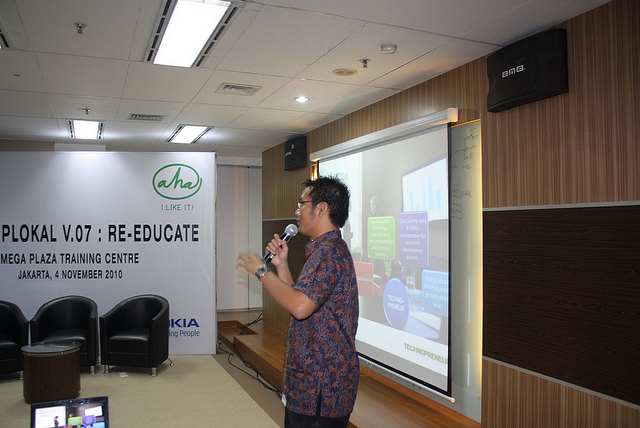
Selanjutnya acara diisi oleh Lingga Wardhana dari TechnoPreneur. Lingga juga adalah pembuat buku dengan judul sama yang sama: TechnoPreneur. Lingga memaparkan bawa negara maju selain dilihat dari faktor faktor ekonomis juga dilihat dari jumlah pengusahanya. Tingkat kelulusan juga menambah tingkat penggangguran kalau semua lulusan  mencari kerja dan tidak ada yang menjadi pembuka lapangan pekerjaan. Ia juga membahas tentang pardigma baru di dunia akademik. Harusnya ada mentoring entrepreneur di silabus akademik. Dan juga, dengan bekerja itu juga adalah sudah merupakan mentoring yang bagus untuk mengetahui sistematis sebuah perusahaan. Jadi walaupun punya idealisme jadi seorang entrepreneur ada baiknya menimba pengalaman bekerja terlebih dahulu, supaya pandangan tentang sistematis perusahaan bisa diketahui.

Poin poin penting dari bukunya mas Lingga Wardhana mengenai hal apa saja yang sebaiknya dilakukan jika ingin menjadi TechnoPreneur,  juga dijabarkan di meet up kali ini. Berikut hasil rangkuman dari tim teknojurnal:

Learn for the expert. Belajar dari yang lebih ahli merupakan poin penting. Jangan terlalu tinggi hati dengan pengetahuan yang kita miliki. Seharusnya proses mentoring untuk entrepreneur dijadikan sebuah mata kuliah di kalangan para mahasiswa, supaya selain baik dari segi teknis para mahasiswa juga baik dari segi entrepreuner.

Amati tiru modif. Tirulah dengan kreatif, kemudian sesuaikan dengan kebutuhan pasar, lalu buat keunikan dari hal yang di tiru tersebut. Jadi tidak harus mulai semua dari nol, dengan belajar dari ahlinya kita bisa mengamati hasil karyanya kemudian bisa kita buat duplikatnya dan kemudian kita modifikasi sesuai kebutuhan pasar. Tidak sedikit para follower yang malahan lebih sukses dari perintisnya. Coba saja kita berkaca pada produk produk Cina. Akan sangat terlihat follower bisa sukses melebihi yang di follow, hehehe..

Encourage yourself for global competition. Bersaing dengan dalam sebuah kompetisi bisa mengajarkan banyak hal mulai dari perencanaan, team work, sampai kedisiplinan. Apalagi jika ditambah memenangkan sebuah kompetisi global. Eksposure pastinya di dapat, sebanding dengan kerja keras. Dan pastinya hal ini bisa menjadi value added yang cukup tinggi.

University as a trigger for technopreneur. Seharusnya kampus kampus , universitas universitas di Indonesia dapat menjadi inkubator technopreneur, karena kalau kita lihat setiap tahun pasti ada penelitian baru. Penelitian tersebut bisa diambil dari proses skripsi, tugas akhir, bahkan tugas harian. Tapi realisasi dari skripsi maupun tugas akhir tersebut masih sangat minim, padahal potensi yang dimiliki sangat besar, apalagi didukung dengan proses mentoring yang tepat. So, bisa dibilang mahasiswa saat ini masih mayoritas ahli membuat visi, bukan ahli menjual visi.

Being valuable for investor. Naikan harga anda di mata para investor, bisa dari segi teknis (kemampuan yang kita miliki), kuantitas produk, kualitas sosial, hingga popularitas yang bermutu sesuai dengan keahlian di bidang masing masing.

Lingga Wardhana
Lingga Wardhana

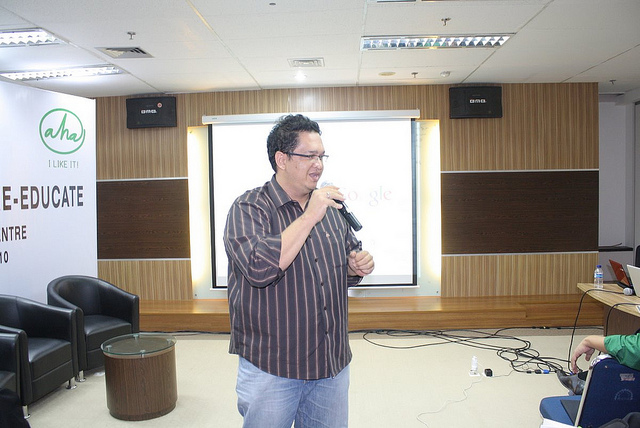
Selanjutnya Andi Sjarief dari SITTI menjelaskan tentang SITTI dan bagaimana SITTI bersaing dengan Google dalam bidang iklan digital. Pak Andi juga menjelaskan tentang keunggulan SITTI dibanding Google di bidang iklan digital. Pak Andi membawakan presentasi SITTI dengan unik seperti biasanya sehingga enak untuk didengar dan tidak membosankan.

Andi Sjarief
Andi Sjarief

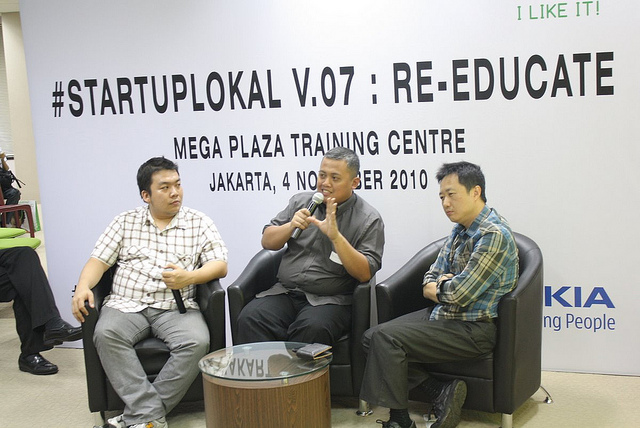
Setelah presentasi Andi Sjarief, meetup memasuki sesi panelis. Kali ini panelisnya adalah pak Andi S. Boediman dari Mojopia dan Chandra Marsono, serta dimoderatori oleh Bernardus Sumartok. Tadinya Sarah Lacy dari TechCrunch juga akan mengisi sesi panelis kali ini, namun berhubung dia sedang berhalangan maka tidak jadi.

Panelis #StartupLokal Meetup v.7
Dari kiri ke kanan: Bernardus Sumartok, Chandra Marsono, Andi S. Boediman

Sesi panelis ini sangat menarik karena mas Chandra dan pak Andi sharing-sharing mengenai pengalaman mereka di dunia startup dan mereka memberikan wejangan-wejangan yang berharga untuk para startup. Beberapa poin menarik dari sesi ini adalah sebagai berikut:
  • Pilih dengan bijak apakah ingin mengejar uang atau popularitas, karena memilih untuk mengambil keduanya sekaligus akan berat
  • Para pemilik startup harus memikirkan masalah permodalan, jangan asal tabrak dan nekat. Nekat tapi siap itu lebih baik.
  • Jangan menjadikan startup sebagai sumber penghasilan utama dan tidak mengerjakan yang lain jika penghasilannya masih kecil atau belum ada
  • Startup harus sudah bisa menghasilkan penghasilan sejak hari pertama
  • Jangan terlalu fokus untuk mencari pemasukan dari webnya saja. Web hanya sebagai media, pemasukan bisa dari offline juga
  • Pemasukan model iklan itu gak gede pendapatannya
  • Melayani client besar dengan memberikan servis yang mereka butuhkan lebih sederhana dan berkelanjutan daripada model bisnis berbasis iklan
  • Buat: akses ke pasar, faktor daya tarik, eksposur ke media
  • BRAND lebih bagus daripada BRAIN
  • Indonesia lagi seksi. Mata dunia sedang melihat Indonesia
  • Tidak perlu jadi programmer untuk membuat sebuah online startup
  • Asosiasikan produk yang dibuat dengan bumbu-bumbu luar negeri. Orang Indonesia lebih tertarik dengan atribut berbahasa Inggris.
Masih banyak lagi yang menarik sebetulnya, namun saya tidak ingat semua dan gak mungkin saya tulis di sini semua. Untungnya di meetup kali ini ada yang merekam seluruh kegiatan meetup, tinggal tunggu untuk selesai diupload saja. Akan saya update artikelnya ketika videonya sudah diupload.

Sunday, May 01, 2011

10 Indonesian Startups at Echelon: Rethinking the Value Proposition

Just a few days ago, I got an email to become the judge for Echelon. e27′s Echelon is a technology events where startups can pitch their idea to get publication and for some, to be spotted by incubators or private equities. There are satellite events in Kuala Lumpur, Singapore and other countries as well. 3 best startups will be brought to Singapore for final pitch.

Aulia Masna (Daily Social), Aaron Tan Wei Cheng (SingTel Innov8), Shinta Dhanuwardoyo (Bubu.com), Danny Oei Wirianto (Kaskus Networks) and myself judge 5 startups, Sixreps.com, Rockto.com, Tasterous.com, Goorme.com, Pricearea.com. Meanwhile Irving Hutagalung (Microsoft Indonesia), Satya Witoelar (Koprol), Aulia Halimatussadiah (NulisBuku.com), Martin Hartono (GDP Ventures) judge the other 5 startups, Ngaturduit.com, Wooz.in, Rserve.me, Infoll.mobi and Bouncity.com

Sixreps.com is a social network for fitness, founded by Denny Santoso, a veteran in fitness industry as he wrote books on diet and became a seller for sport supplements. This social network get a good adoption among users by simply showing off their fitness progress and networking with users with similar interests. The current value of this site is actually the founder who really understand the insight of this industry and have a strong relationship with fitness center, health media and brand owners who target the fitness industry. My challenge for this site is the future sustainability, since I haven't see a real sustainable model for social media. I would suggest to rely on revenue from sales acquisition for fitness membership and ecommerce on health products beside common advertising model. And by giving benefit for health influencers when they bring in their community will make sure a sustainable traffic for the site.

Despite their good domain, Tasterous.com doesn't show a strong strategy as food directory & media. Even with the support of Kaskus and Urbanesia founders, they don't have a strong business model. Most of the presentation concentrate only on features without offering a real benefit for users. Purely rely on user generated content, it will be hard for them to compete with other food directories. As a clone to foodspotting.com, they should concentrate to build strong contents so they can monetize through advertising, sponsored content, sponsored competitions and daily deals.

Competing in the same domain, Goorme.com offers a stronger value proposition. It understand your taste profile, you just have to rate the food on their website. Started as food directory, they are now providing services to cafe and restaurants to have facebook apps and menu. This business model provide neccessary cashflow for the company and build good contents.

Rockto.com is a social bookmarking tool with rating model similar to digg.com. I don't see real value offered compared to other social bookmarking site. To be survived, it really needs to rethink how to get massive users adoption. I suggest to build this platform on top of facebook so they can get user traction by providing value to existing users.

Pricearea.com by Andry Suhaili is really simple to understand. Price search! Similar to Froogle or now reborn to Google Products. Search is simple to understand but a challenging one. It is a scale game. This is my personal favorite, but I would suggest to have a shorter domain. And they turns out to win the People Choice Award.

I don't particularly judge the other 5, but here's my comments:
  • Bouncity.com, a clone of Scvngr.com, is a mobile location based services that giving reward by merchants if the users doing mobile activity. Have a good potential if they lock major brands to provide real value as rewards. The developer team behind Phasedev need to have a solid operation team.
  • Ngaturduit.com is good for financial services to provide personal finance tools like Mint.com.
  • Wooz.in is a cool tools for check-in using RFID bracelet. Currently it only fits for marketing purposes. If it can be positioned as a data mining tools for event and destination, then it might be able to find a wider adoption.
  • Rserve.me is a booking engine for hotels and restaurants. If it merely used as a backend software services, it will compete with other already successful booking engine. They can create more value if they get hotel deals.
  • Infoll.mobi as traffic information will face a sustainability challenge since they rely on user generated content. Need to have their own trusted content.
In summary, every startup need to build a strong value proposition why people need to visit the website or use their products and services. As a reality check they can attract many users as possible so the business will come, or build a clear business model. I would suggest to rely on many revenue stream instead of just one.

Despite my harsh comments on some, I believe Indonesian creative entrepreneurs is getting better. They are only need to shape not only the products, but the business acumen. I wish the best luck for the winner!